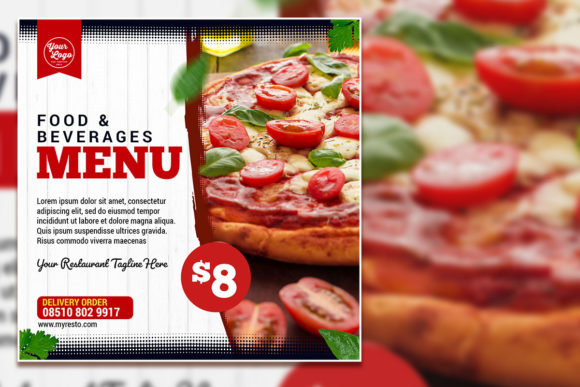
Vintage Food Menu Social Media Post: A Strategic Asset for Brand Storytelling
In an era where digital feeds are saturated with polished, high-gloss content, the vintage food menu social media post stands apart as a deliberately understated yet remarkably effective tool. It is not simply a design file; it is a strategic vehicle for narrative, differentiation, and emotional resonance. For entrepreneurs, marketers, and creators navigating the noise of modern social platforms, this format offers a way to slow the scroll and invite genuine engagement. Understanding what makes this approach work, and when to deploy it, can transform how you connect with your audience and reinforce your brand's long-term positioning.
A vintage food menu social media post typically refers to a graphic template designed to mimic the aesthetic of old-fashioned restaurant menus, diner chalkboards, or retro culinary advertisements. The file you encounter is a fully layered Photoshop document, calibrated at 300 DPI with an RGB color profile, sized at 2000 by 2000 pixels. It comes with one hundred editable layers, print-ready formatting, and relies on free fonts. The image placeholders are intentionally blank, meaning you supply the photography. This structure is not a limitation; it is the core feature. The template provides the architectural charm, while your visuals supply the authenticity.
Why a Vintage Food Menu Format Demands Strategic Consideration
The decision to use a vintage food menu social media post should not be aesthetic alone. The format carries implicit messages about your brand's values, history, and relationship with craft. When you present a menu in a vintage style, you signal that your offerings are rooted in tradition, quality, and care. This can be strategically powerful for businesses that want to emphasize artisanal methods, local sourcing, or family recipes. The format implicitly rejects the disposable, fast-paced nature of much digital content and instead invites the viewer into a slower, more intentional experience.
For a coffee roaster, a vintage menu post could communicate the heritage of bean cultivation. For a bakery, it could evoke a grandmother's kitchen. For a restaurant launching a seasonal menu, it creates a sense of occasion and permanence. The strategic usefulness lies in its ability to cue nostalgia without requiring backstory. The design does the emotional work before a single word is read.
Aligning Design with Brand Architecture
Before you open the PSD file, consider where this post fits within your broader brand architecture. The vintage food menu social media post works best when it supports a narrative of authenticity, craftsmanship, or heritage. If your brand voice is minimalist and futuristic, the vintage approach may confuse your audience. Conversely, if you position yourself as a modern twist on tradition, the vintage menu becomes a natural visual counterpart. Map your visual strategy first. Let the menu format serve a defined purpose rather than being a decorative afterthought.
Think about the customer journey. A vintage menu post can function as a teaser for an upcoming offering, a behind-the-scenes look at recipe development, or a celebration of a longstanding dish. Each use case requires different copy, different image choices, and a different tone within the template. The layered file gives you control over every element, but that control demands intentional direction.
Practical Applications Across Business Types
The versatility of a vintage food menu social media post extends beyond traditional restaurants. Consider its potential in adjacent spaces: a brewery listing its seasonal taps, a farmer's market vendor showcasing produce, a meal kit service highlighting a regional recipe, or a food blogger sharing a family dish with provenance. The template's structure—title, item list, descriptions, and decorative flourishes—maps naturally onto any culinary offering.
For a small business owner, the time saved by starting with a layered PSD cannot be overstated. Building a vintage aesthetic from scratch requires sourcing textures, typography, and distressed elements. A well-constructed template eliminates that research phase. You focus instead on selecting the right photograph, writing compelling menu copy, and ensuring the final post aligns with your campaign timing.
A practical example: A farm-to-table restaurant plans a four-week summer menu series. Each week, they release a vintage menu post featuring a single hero dish. The template remains consistent, but the image and copy change. Over the month, followers anticipate the reveal. The repetition of the format builds recognition, while the variation inside it sustains interest. This is low-effort, high-consistency content that supports both creativity and operational rhythm.
Using the Template for Customer Experience and Positioning
Beyond social media, consider how a vintage food menu social media post can be repurposed for email newsletters, in-restaurant QR code menus, or printed takeaway cards. Because the file is print-ready and 300 DPI, you are not locked into digital-only usage. A physical version of the same design creates a cohesive brand experience across touchpoints. Customers who see the vintage menu on Instagram and then receive a printed version with their order feel a sense of continuity. That continuity builds trust and reinforces brand memory.
Positioning also benefits from the format's inherent scarcity. A vintage menu implies limited availability, seasonal change, or special curation. When you use this style, you implicitly tell your audience that what you are offering is not mass-produced. It is selected, created, and presented with intention. This can justify premium pricing and encourage faster decision-making from customers who perceive a time-limited opportunity.
Planning and Decision-Making Before You Design
Resist the urge to open the template and start placing images immediately. That approach leads to generic results. Instead, begin with a brief that answers specific questions: What is the goal of this post? Is it to drive orders, announce a new item, celebrate a milestone, or deepen brand storytelling? Who is the primary audience, and what emotional response do you want to evoke? How does this post fit into the broader content calendar for the week or month?
Once the goal is clear, move to image selection. The template's blank image placeholders are the most critical variable. A poor photograph will undermine the entire vintage aesthetic. Even the best layered file cannot rescue a low-quality or mismatched image. Choose photos with consistent lighting, warm tones, and composition that allows the food to remain the hero. Avoid cluttered backgrounds that compete with the template's decorative elements. If you lack professional food photography, consider styling a single dish on a neutral surface with natural light. One strong image is better than multiple mediocre ones.
Typography decisions within the template should follow your brand guidelines. The file includes free fonts, but you are not obligated to use all of them. Select one or two that align with your voice—perhaps a serif for headings and a clean sans-serif for descriptions. Consistency across posts builds visual language over time. Changing fonts arbitrarily from post to post weakens recognition.
The Risks of Using a Vintage Menu Template Without Clarity
Every tool has a downside when applied without thought. The most common risk of using a vintage food menu social media post is thematic fatigue. If your entire feed adopts the same distressed texture, sepia tones, and ornate borders, you may inadvertently signal stagnation rather than tradition. The format works best as an accent, not a default. Use it for specific campaigns, seasonal launches, or heritage stories. Let the rest of your content breathe in a different visual register so that the vintage menu retains its impact.
Another risk is misalignment between the vintage aesthetic and the actual customer experience. If your brand promises fast, modern convenience but your social media shows antique menu designs, you create cognitive dissonance. The customer who arrives expecting old-world charm may be disappointed by a utilitarian ordering system. Alignment between visual promise and operational reality is essential for trust.
There is also the subtle danger of relying on the template to do the strategic work for you. A beautiful vintage menu post cannot compensate for unclear messaging or weak copy. The design draws the eye, but the words must hold attention and drive action. Allocate as much care to writing the menu descriptions and call-to-action as you do to selecting the photograph. The two elements must work in harmony.
Long-Term Value and Creative Productivity
From a productivity standpoint, a well-structured PSD file with one hundred layered components accelerates your creative workflow. You can reuse the same base file for multiple posts by toggling layer visibility, swapping images, and editing text. Over a quarter of consistent use, you will develop a library of variations that feel distinct yet unified. This efficiency frees time for other strategic work—community engagement, partnership development, or operational improvements.
For freelancers and agencies serving food clients, the vintage menu template becomes a deliverable asset. You can offer it as part of a social media package, customizing the layers to reflect each client's branding. The 2000 by 2000 pixel size ensures compatibility across platforms, and the RGB color profile guarantees screen accuracy. The print-ready format also allows you to upsell printed materials, creating an additional revenue stream from the same design investment.
The long-term strategic value lies in brand memory. Audiences encounter thousands of visual messages daily. A distinctive format—especially one as evocative as a vintage menu—creates a mental anchor. When your audience thinks of comfort food, tradition, or quality ingredients, your brand's posts come to mind. That association is not built overnight, but it is reinforced each time you publish a carefully crafted vintage menu post. Over months and years, the format becomes synonymous with your brand's promise.
Integrating the Template into a Broader Content Ecosystem
Consider how a vintage food menu social media post supports goals beyond immediate engagement. Link it to a longer-form piece of content, such as a blog post about the origins of a recipe or a video showing preparation techniques. The menu post becomes the entry point; the deeper content provides the substance. This layered approach satisfies both the quick-scrolling user and the genuinely interested prospect. It also signals to search engines and platform algorithms that your content has depth, which can improve organic reach over time.
When planning your content calendar, anchor the vintage menu posts around moments of significance: a new season, a product launch, a community event, or a company milestone. By tying the format to meaningful dates, you avoid the trap of random posting. Each menu post carries contextual weight, making it more likely to resonate and be shared.
Making Intentional Choices with a Vintage Food Menu Post
Ultimately, the value of a vintage food menu social media post depends entirely on how strategically you deploy it. The template is a starting point, not a finished product. Your choices—which image to place, which words to write, which campaign to tie it to—determine whether the post fades into the feed or stops the scroll. Approach each post with the same rigor you would apply to any significant brand asset. Define the goal, select the visual, craft the copy, and schedule the post with context in mind.
The best vintage menu posts feel inevitable. They look like they belong exactly where they appear, carrying the right tone for the right audience at the right moment. Achieving that feeling requires deliberateness. It requires understanding that the vintage aesthetic is a tool for meaning, not decoration. When used with intention, the format elevates your brand's story, reinforces your positioning, and creates lasting connections with the people who matter most to your business.
If you have not yet explored this approach, begin with a single post for a specific purpose. Test it, observe the response, and refine your process. The layered file gives you flexibility. Your strategy gives you direction. Together, they form a capability that can serve your brand for years, across platforms and formats, as long as you remain thoughtful about what you say and how you say it.